
Marriage and Divorce Records Sit in Two Offices
This is the key point for any Stark County marriage and divorce records search. A marriage license is a Probate Court record. A divorce decree is a court case record in the domestic relations and common pleas system. They are not at the same counter, and they prove different things.
A marriage license shows that a license was issued, used, and recorded. A divorce decree shows that a marriage was ended and lists the court's orders. So a person changing a name after a divorce needs the decree, while a person proving a marriage needs the marriage record. Start with the record you actually need, then go to the office that holds it.
The reason this split exists is structural, not random. Ohio assigns marriage licensing to the Probate Court, which also handles estates and guardianships. Divorce, by contrast, is a contested or agreed court case about ending a marriage, so it belongs with the trial court and the Clerk of Courts. The two records even prove different facts in everyday life. A marriage record supports a name on a benefit claim, while a divorce decree supports the legal end of that marriage. Mixing them up sends people to the wrong counter and costs a return trip.
Stark County Probate Court Marriage Department
Marriage licenses are handled by the Stark County Probate Court, not the Clerk of Courts. The Marriage License Department keeps shorter hours than the rest of the court, so plan around that. Judge Curt Werren presides over the Probate Court.
Stark County Probate Court
110 Central Plaza South, Suite 501
Canton, OH 44702
330-451-7755
Court: 8:30 a.m.–4:30 p.m. Mon–Fri
Marriage Dept: 8:30 a.m.–4:15 p.m. Mon–Fri
The Probate Court page links a Marriage Department, Forms, Case Search, Records, and FAQs. For estates and guardianships handled by the same court, see the probate records page.
How to Apply for a Stark County Marriage License
Plan the visit around the Marriage License Department hours, which end at 4:15 p.m. Call ahead to confirm whether both applicants must appear and what identification is accepted. Then work through the steps below.
- Call 330-451-7755 to confirm whether both applicants must appear and what ID is accepted.
- Complete any pre-application or paper form the Probate Court requires.
- Appear during marriage department hours, Monday through Friday, 8:30 a.m. to 4:15 p.m.
- Pay the license fee by an accepted method.
- Use an authorized Ohio officiant for the ceremony.
- Return the completed license for recording.
- Request certified copies from the Probate Court after recording.
Marriage License Application Details
Ohio marriage applications ask for identity and history details from both applicants. Bring the items below, and confirm the current list on the Probate Court marriage page before your visit, since requirements can change.
| Item | Required | Notes |
|---|---|---|
| Applicant legal names | yes | Both applicants. |
| Prior names | if any | Maiden or former names. |
| Date of birth | yes | Each applicant. |
| Residence address and county/state | yes | Where each applicant lives. |
| Parent information | yes | Parent names. |
| Prior marriage details | if applicable | How it ended, with date, court, county, and state. |
| Identification | yes | Bring valid ID. |
| Payment | yes | Confirm the method and fee. |
Be ready with prior-marriage facts if either applicant was married before. The form asks how the prior marriage ended and where.
Searching Stark County Divorce Records
Divorce records are court case records, not Probate Court files. They live in the domestic relations and common pleas system. Search by party name or case number in the county online docket. A certified divorce decree should be requested from the Clerk of Courts and the Domestic Relations division.
A divorce file can hold many documents. These include the complaint or petition for dissolution, a separation agreement, a parenting or shared parenting plan, a child support worksheet, temporary orders, financial affidavits, the final decree, and post-decree motions. Some parts are limited from public view. Financial affidavits, child identifiers, and protected addresses may be redacted or restricted under court rules. For the broader court search tools, see the court records page and the Court of Common Pleas page.
When a case will not come up, the cause is often simple. The name may be spelled a different way than the search term. The file may predate online indexing. A protective order or a sealed matter can keep parts hidden. The case may use a number with a prefix or leading zeros. If a search returns nothing, call the Clerk before assuming the record is gone, and give the names, an approximate year, and the type of case.
Filing for Divorce in Stark County
Ohio offers more than one way to end a marriage, and the right path depends on the facts. The general steps are similar across cases, though forms and local rules vary. People who cannot afford the filing fee can ask about a poverty affidavit or fee waiver.
- Confirm residency and venue under Ohio domestic relations law.
- Choose divorce, dissolution, legal separation, or annulment based on the facts.
- Use the Ohio Supreme Court or local domestic relations forms.
- File in the proper Stark County domestic or family division.
- Pay the filing fee or submit fee-waiver paperwork if eligible.
- Serve the other party.
- Attend any required hearings, parenting classes, or mediation.
The path you pick changes the process. A dissolution is an agreed end to a marriage, where both spouses sign a separation agreement before filing. A divorce is a court case that can be contested, with claims about property, support, and parenting. Legal separation and annulment are narrower options for specific facts. When children are involved, the court often requires a parenting class and a parenting plan. Confirm residency and venue first, because the case must be filed in the right county and division.
Certified Copies and Where to Get Them
Certified copies matter more than screenshots for legal use. A certified marriage record comes from the Probate Court Marriage Department. A certified divorce decree comes from the Clerk of Courts and the Domestic Relations division. Agencies often require a certified copy for a driver license change, a Social Security update, a passport, benefits, or a remarriage.
The image below shows Ohio Legal Help, a free statewide guide that explains marriage, divorce, and record steps in plain language. You can review it on the Ohio Legal Help site.
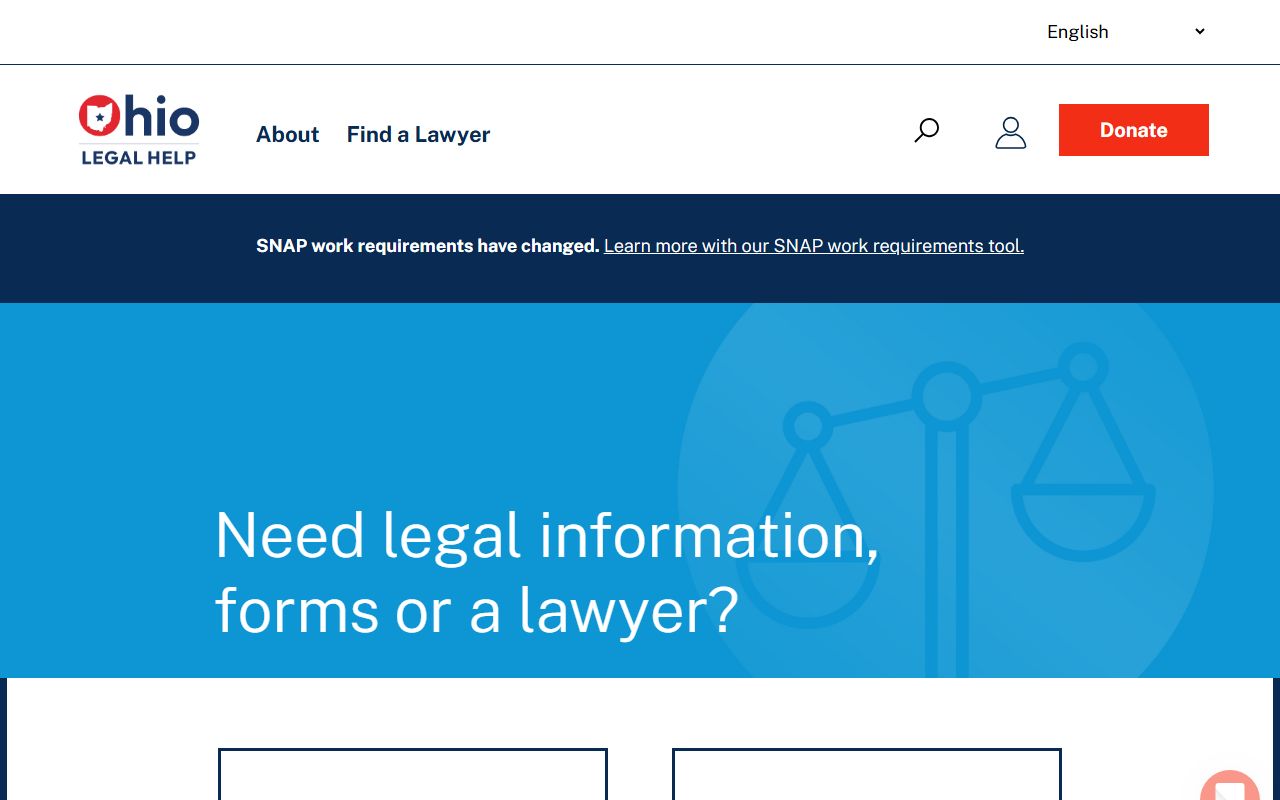
Use it to understand the process, then go to the right Stark County office for the actual record or certified copy.
When you ask for a certified copy, a clear request speeds things up. For a marriage record, give both spouses' names and the approximate marriage date, and ask the Marriage Department about the fee and accepted payment. For a divorce decree, give the party names, the approximate year, and a case number if you have one, and ask the Clerk whether the Domestic Relations division holds it. State whether you want pickup, mail, or in-person service, and confirm the cost before a mailed or certified copy.
Marriage and Divorce Record Fees
Fees depend on the office and the service. The current marriage license fee and divorce filing fee are set by the courts, so confirm them directly before you go. The verified payment detail below covers the county payment portal.
| Item | Amount |
|---|---|
| County payment portal processor fee | 2.40% of payment, minimum $2.00 |
| Marriage license fee | Confirm with Probate Court at 330-451-7755 |
| Divorce filing fee | Confirm with the Clerk of Courts |
| Certified copies | Confirm with the office that holds the record |
For requests handled by the Clerk of Courts, the Clerk of Courts page explains how to ask for a certified copy and what to include.
Confidential Domestic Records
Not every detail in a domestic case is public. Courts protect certain information to keep people safe and to follow Ohio rules. Victim addresses, child identifiers, and some financial data can be redacted or sealed. Juvenile and family matters carry their own access limits.
This protection does not hide the existence of a divorce, only the sensitive parts. The basic docket and the fact of a decree are usually visible, while a financial affidavit or a child's full name may not be. If you need a protected detail for a legal reason, ask the court what process applies. The right approach respects the limits and still gets you the record you can lawfully access.
Note: A screenshot of an online docket is not a certified record, so request a certified copy from the right office for any legal use.