
How to Look Up Stark County Jail Population Data
The official jail population data lives on the Sheriff's Jail Division page. That page reports the operational capacity and a 12-month booking snapshot. It is not a live dashboard, so the figures reflect the period the office published rather than today's count. For broader context, federal and state agencies publish jail reports on a regular schedule.
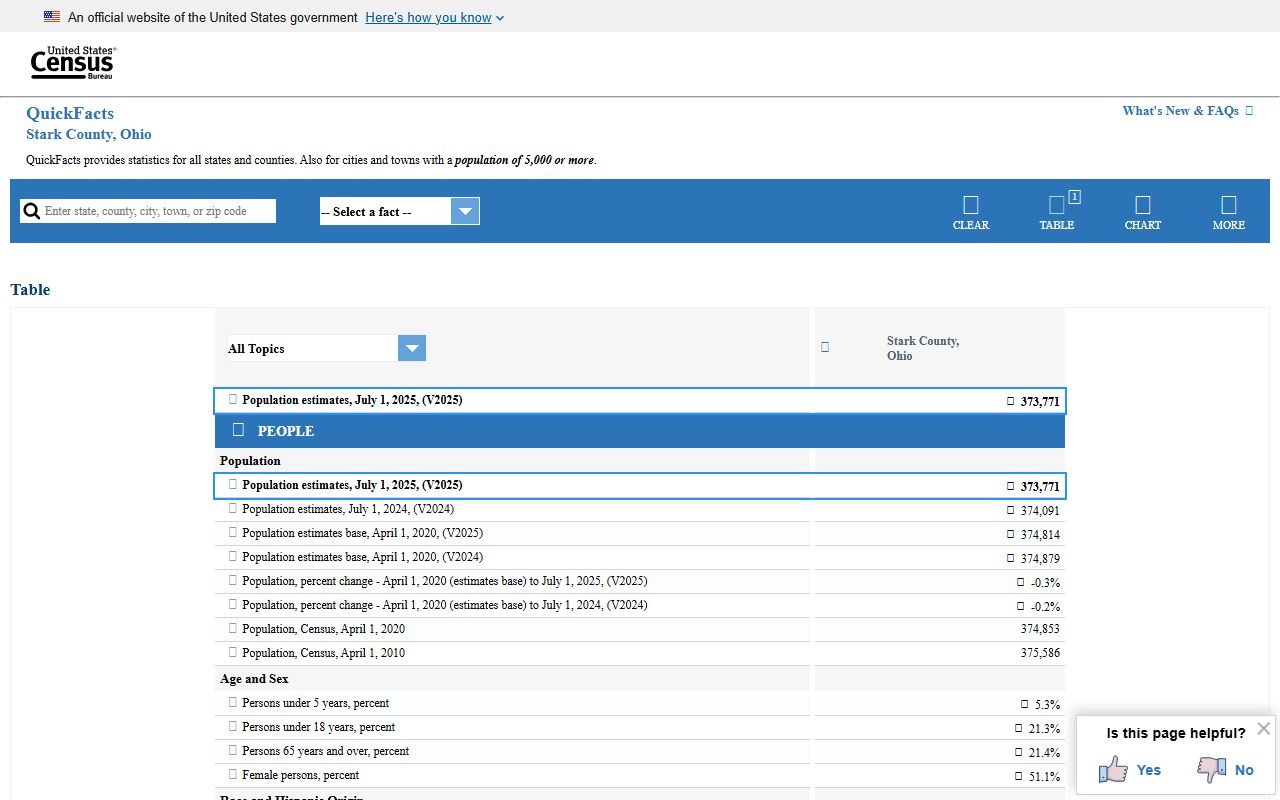
The U.S. Census also frames the data by giving the county's overall population. That helps put a jail count next to the size of the community it serves. The Census QuickFacts page for Stark County is one place to confirm those resident totals.
Read the jail snapshot and the broader reports together. Neither one alone gives a real-time population count.
It helps to know what a jail count includes. A county jail like this one holds people at many stages of a case, not just those serving a sentence. So a single number blends people held for a few hours with people held for months. That is why the official snapshot focuses on bookings and capacity rather than a daily headcount. When you read any figure, note whether it counts bookings, average daily population, or unique people, because each measures a different thing.
Stark County Jail Capacity Overview
The county runs one main jail, on the northeast side of Canton. The Sheriff's Office lists its operational capacity at 526 inmates. It serves as a 24-hour booking facility for every law enforcement agency in the county, so its population can swing with arrests across many cities and townships.
| Facility | Address | Capacity | Notes |
|---|---|---|---|
| Stark County Jail | 4500 Atlantic Blvd. NE, Canton, OH 44705 | 526 | 24-hour booking facility for all county law enforcement agencies. |
Capacity is a ceiling, not a daily count. Actual numbers rise and fall as people are booked in and released.
Stark County Jail Booking Volume Snapshot
The clearest local figure is booking volume. The official page reports 9,848 bookings during one 12-month period, from Nov. 1, 2017 through Nov. 1, 2018. That is a high number for a single jail and shows how often the facility processes new arrivals. A booking count is not the same as the number of unique people, since one person can be booked more than once in a year.
The same snapshot anchors the gender split and the average stay below. It remains the best official county data point the Sheriff's Office has published.
Put the booking total next to the county's size for scale. Stark County has roughly 373,771 to 374,853 residents, depending on the source. Against that, nearly 10,000 bookings in a year shows how often local arrests flow through one facility. The figure counts events, not people, so a person arrested twice counts twice. Even so, it is a strong sign of how active the jail is for a county this size.
Male and Female Booking Breakdown
The booking snapshot splits by gender. Of the 9,848 bookings in that period, the large majority were male. The table below shows the official figures.
| Booking Group | Count |
|---|---|
| Male bookings | 7,332 |
| Female bookings | 2,516 |
| Total bookings | 9,848 |
This breakdown is from the published booking period, not a live housing count. Current housing can differ from these shares.
Average Length of Stay
The official page lists an average time in the county jail of 17 days, based on bookings. People sentenced to county jail may stay up to two years, but most stays are far shorter. A jail like this one mixes very short holds with longer sentences, so an average smooths over a wide range.
Short stays are common because the jail holds many people for early stages of a case. Some are released within days on bond, while others wait longer for hearings or transfer.
The two-year ceiling reflects Ohio law for misdemeanor jail terms; people sentenced to longer prison terms go to state custody instead. That split shapes the average. A county jail is built for shorter holds and early case stages, so a 17-day average fits a facility that turns over its population often. A few long stays pull the average up, while a flood of brief holds pulls it down.
Pretrial and Sentenced Population
The jail does not hold only sentenced people. It holds a wide range of statuses, which is normal for a county jail. The official page describes who is confined there.
- People held on charges from traffic offenses to capital cases.
- People awaiting trial or sentencing.
- People awaiting transfer to state institutions.
- Fugitives awaiting return to other states.
- People facing probation or parole revocation.
It also holds people committed by the three municipal courts, the Court of Common Pleas, and the Domestic Relations Court. That mix is why a single daily number hides a lot of detail.
This range shapes any honest reading of population data. A pretrial detainee has not been convicted and may be released soon on bond. A sentenced person serves a set term. A transfer hold waits for state pickup. A federal or out-of-state hold is there for another government entirely. Because the official page does not break the count into these groups, the safest approach is to describe the mix in words and avoid claiming a precise pretrial or sentenced share that the county has not published.
Jail Renovation and Additions
The jail is changing. In 2025, public media reported an approximately $80 million jail renovation and addition. Officials broke ground on Aug. 15, 2025. Sheriff Eric Weisburn noted that parts of the current jail date to the 1960s.
These figures come from news coverage, not from the core official jail statistics page, so treat them as dated context. They point to future capacity changes rather than the current published numbers.
A project of this size can change the picture over time. New or improved housing can shift capacity and the kinds of beds a jail offers. Until the county publishes updated capacity figures, the 526 operational capacity stays the official number to cite. Watch county commission construction records for confirmed details rather than relying on news estimates alone.
National and State Jail Population Context
To compare Stark County to other places, use outside data and label it clearly. The Bureau of Justice Statistics publishes national and state jail reports. The Vera Institute publishes county incarceration trends. These sources allow a rough comparison of jail use per 100,000 residents, but they are not real-time county counts.
| Measure | Source | What It Tells You |
|---|---|---|
| County jail figures | Stark County Sheriff (official) | Capacity 526; one historical booking snapshot. |
| State jail rate per 100,000 | Bureau of Justice Statistics (external) | Context for Ohio as a whole. |
| National jail rate per 100,000 | Bureau of Justice Statistics and Vera (external) | Context for the U.S. as a whole. |
Keep the county figure separate from the state and national rates. The first is local and official; the others are external estimates used only for context.
A rate per 100,000 residents is the common way to compare places of different sizes. The Bureau of Justice Statistics builds these rates from national jail surveys, and the Vera Institute tracks county trends over time. Both can show whether a county leans higher or lower than the state or the country. They cannot, on their own, tell you the Stark County Jail count on a given day. Use them for the broad pattern, then confirm any current local number with the Sheriff's Office.
Data Gaps and Verifying Current Counts
There is no current public average-daily-population dashboard for the Stark County Jail, and no detailed demographic breakdown beyond the gender split above. The official page offers one historical year, not a five-year trend. So the honest summary is simple. The jail publishes its capacity and a booking snapshot, not a live population feed.
For a current count, contact the Sheriff's Office and Jail at 330-430-3800. For trend charts, use the federal and state sources above and label them as external data, not county counts.
Being clear about gaps is part of good data work. Where the county has not published a figure, this page says so rather than guessing. That covers a current daily population, a detailed race or age breakdown, and a multi-year trend line. Filling those gaps with numbers from unofficial sources would be misleading. The better path is to cite what the county confirms, label outside data as context, and point readers to the Sheriff's Office for anything current.
Searching Stark County Inmate Records by Name
This page is about population data, not individual lookups. To find a specific person, use the inmate search page, which covers how to verify current custody, or the released inmates page for checking on a release.
Where the Data Comes From
The capacity, booking total, gender split, and average stay all come from the official Sheriff's Jail Division page. The county population figures come from the U.S. Census and the state roster, which list Stark County at roughly 373,771 to 374,853 residents across 567 square miles, with Canton as the county seat. The renovation figures come from 2025 news reports. National and state comparisons come from the Bureau of Justice Statistics and the Vera Institute.
Each figure on this page is tied to one of those sources, and each carries its own date. That mix is normal for county jail data, where one office publishes a snapshot and outside agencies supply the trends. When you cite a number, name the source and the period it covers so readers know exactly what it measures.
Note: The jail figures reflect the period the Sheriff's Office published and should not be read as a live, present-day population count.