
How to Search Stark County Court Records
The main online case docket for Common Pleas cases runs through the county's CJIS (Case Information System). That system covers felony, large civil, domestic, and foreclosure cases filed in the Court of Common Pleas. It does not include every court in the county. Municipal courts in Canton, Massillon, and Alliance run their own dockets, and the Probate Court uses a separate eServices portal at probate.co.stark.oh.us. Start by naming the court before you open any search tool.
Have at least one identifier ready. A case number gives the cleanest, fastest match. If you don't have one, a last name works as a starting point. You can narrow results by case type, court, or filing date range. A date of birth can help with common names, though some systems limit how it displays. The naturalization search uses its own portal at scwebnet.starkcountyohio.gov for those records specifically.
- Decide which court holds the case. Felony, civil over the municipal limit, divorce, and foreclosure go through the Court of Common Pleas. Misdemeanor, traffic, small civil, and eviction go through Canton, Massillon, or Alliance Municipal Court. Estates, wills, guardianships, marriage, adoption, and name changes go through Probate Court.
- Open the correct portal. For Common Pleas, use the county CJIS docket. For probate cases, use the Probate eServices site linked above. For municipal courts, check the specific court's website.
- Enter a case number if you have one. A case number gives a direct hit. If you do not have one, type the party's last name and first name or initial.
- Apply filters. Use the Case Type dropdown to pick Civil, Criminal, Traffic, or Domestic. Use the Court dropdown to pick Common Pleas or a specific municipal court. A filing date range cuts down a long list of name matches.
- Open the matching case. Read the docket entries from newest to oldest to see hearings, motions, and the final disposition. Note the judge, attorney, and current status.
- Request a certified copy if you need the record for legal use. Contact the Clerk of Courts at 330-451-7801 or visit the office at 115 Central Plaza North, Suite 101, Canton, OH 44702. Online copies from a portal are not certified records.
Massillon Municipal Court offers a docket search and online payments on its own site. If your case name starts with "Massillon v." or the citation lists that court, go there directly rather than searching Common Pleas.
Stark County CJIS Court Records Search Fields
The CJIS portal gives you several ways to narrow a search. Not every field is required. Filling in more fields gives a tighter result list, but you can run a valid search with only a last name. The table below covers every field the system offers, what type of input it takes, whether it is required, and what to keep in mind when using it.
| Field Label | Type | Required | Notes / Format |
|---|---|---|---|
| Case Number | Text | Optional | Best for an exact match. Include any prefix or leading zeros from the original paperwork. |
| Last Name | Text | Optional | Can search alone without any other field. Use the spelling on court documents, not a nickname. |
| First Name | Text | Optional | Narrows results when last name returns too many hits. Partial entries may work. |
| Company Name | Text | Optional | For business parties, creditors, or corporate plaintiffs and defendants. |
| Date of Birth | Date | Optional | Helps separate people with common names. Display of DOB in results may be limited by privacy rules. |
| Case Type | Dropdown | Optional | Options include Civil, Criminal, Traffic, and Domestic. Picking one type cuts unrelated results. |
| Court | Dropdown | Optional | Choose Common Pleas, Canton Municipal, Massillon Municipal, or Alliance Municipal to limit scope. |
| Filing Date | Date range | Optional | Use an approximate date when you know roughly when the case started. A range works if you are unsure of the exact date. |
| Attorney Registration Number | Text | Optional | Pulls all cases linked to a specific attorney. Useful for attorneys checking their own dockets. |
| Search | Button | Yes | Submits the search. At least one field must have an entry for the system to run. |
| Reset | Button | Optional | Clears all fields and returns the form to its default state. |
If a search returns no results, there are several common reasons. The spelling may differ from what the court used. The case may sit in a municipal court not covered by the CJIS system. The record may predate online indexing. It may be sealed, expunged, or involve a juvenile. The case number may include a prefix or leading zeros you left out. Or the person may be a witness or attorney in the case, not a party.
Types of Stark County Court Records
Stark County courts produce several distinct categories of records. Each type lives in a specific court or division, and knowing which type you need helps you pick the right search tool and the right office. Most categories are public under Ohio's records framework, though some have restrictions built in by statute.
The Court of Common Pleas is the source for the largest categories. Felony criminal cases, large civil suits, foreclosures, and domestic cases all pass through Common Pleas and the Clerk of Courts. The three municipal courts produce separate records for traffic, misdemeanor, and limited civil cases within their geographic territories. The Probate Court is entirely separate and handles a specialized set of filings that affect estates, families, and personal status. Juvenile records are technically part of the family court system but carry much stricter access limits under Ohio law.
- Civil records include complaints, answers, motions, judgments, garnishments, liens, and foreclosure filings in Common Pleas. Smaller civil disputes under the jurisdictional limit land in a municipal court instead.
- Criminal records cover grand jury indictments, arraignments, pleas, sentencing entries, and warrant issuance in Common Pleas for felonies. Misdemeanor criminal records sit in the municipal courts.
- Domestic and family records include divorce, dissolution, legal separation, custody orders, child support, and civil protection orders. These file in the domestic relations division of Common Pleas.
- Probate records cover estates, last wills, guardianships over adults and minors, marriage licenses, adoptions, and name changes through the Probate Court.
- Traffic records include traffic citations, OVI charges, license suspensions, and failure-to-appear entries in the municipal courts and occasionally Common Pleas for serious OVI or vehicular felonies.
- Sheriff sale and foreclosure records are a subset of civil Common Pleas filings, with the actual sale process managed through a separate sheriff sale system.
For more on how court dockets work or how public records requests apply to non-court county documents, those pages cover the specifics.
Note: Juvenile records in Stark County are handled by the Family Court and are subject to access limits under Ohio Revised Code Chapter 2151 rather than standard court records rules.
What Stark County Court Records Show
A case record is a running file of everything the court did from the day it was opened. The docket entries list every filing, hearing, ruling, and order in date order. What appears in a public docket depends on the case type, the court's online system, and what privacy rules apply. Some fields are redacted by default under Ohio's Rules of Superintendence, Rules 44 through 47. Social Security numbers, financial account numbers, minor identifiers, and certain personal data are removed from public-facing records. The table below shows what you can typically expect to see.
| Field | What It Shows |
|---|---|
| Case Number | The court-specific identifier for the case, unique to the court division and year filed. |
| Court | Which court the case is in: Common Pleas, or one of the three Stark County municipal courts. |
| Case Type | The category: civil, criminal, traffic, domestic, or foreclosure. |
| File Date | The date the case was opened in the court's system. |
| Parties | The names of each side and their roles: plaintiff, defendant, petitioner, or respondent. |
| Date of Birth | May be redacted or display-limited depending on the system and case type. |
| Charge | On criminal and traffic cases, the most severe charge label entered when the case was filed. |
| Judge and Attorney | The assigned judge and any counsel of record for each party. |
| Docket Entries | A chronological log of every event: hearings, rulings, continuances, motions, and the final disposition. |
| Documents | Scanned images are available online for many filings. Certified copies must come from the clerk's office, not from a screenshot. |
| Redactions | Social Security numbers, financial account numbers, minor identifiers, and sealed or restricted material are removed from the public record. |
The charge field shows what the person was accused of, not what happened. Always read the final docket entry for the actual disposition. A charge can be amended, reduced, or dismissed before the case closes. The last entry tells the real story.
Public Access to Stark County Court Records
Ohio treats court records and county office records under two different legal frameworks. Court case records fall under the Rules of Superintendence for the Courts of Ohio, specifically Rules 44 through 47. These rules presume access to court records unless a law, rule, or individual court order says otherwise. County administrative records, like records held by non-court county offices, fall under the Ohio Public Records Act at Ohio Revised Code Section 149.43. That statute requires public offices to make records available for inspection and copying within a reasonable time.
Anyone can request a court record. There is no residency requirement and no need to state a reason. The clerk's office may charge a fee for copies, and certified copies cost more than plain copies. The online docket is a convenience tool. The official record stays with the court or clerk. A printed screen or screenshot from CJIS is not a certified copy and will not be accepted for legal proceedings.
Important: An online docket printout is not a certified record. Courts and employers require certified copies for legal proceedings. Request certified copies directly from the Clerk of Courts.
Sealed, Expunged, and Restricted Stark County Records
Not every Stark County court record is open to the public. Several categories are restricted by statute, and access rules differ depending on who is asking and what the record covers. Understanding which records are off-limits helps avoid a wasted trip to the courthouse or a blank search result that has a real explanation.
Juvenile records present the biggest access limit. Cases handled through the Stark County Family Court fall under Ohio Revised Code Chapter 2151, which restricts public access to juvenile proceedings and records. Just because a juvenile record does not appear in an online search does not mean it doesn't exist. Adoption records are sealed under Ohio Revised Code Section 3107.17. Mental health proceedings are protected under Ohio Revised Code Section 5122.31. Victim information in criminal cases is protected under Ohio Revised Code Chapter 2930. Grand jury materials and confidential law enforcement investigatory records are also withheld from public access by default.
Sealing and expungement are two different tools for limiting access to a criminal record. Sealing limits public access but the record still exists. Expungement is stronger. It can require destruction of the record. Both are governed by Ohio Revised Code Chapter 2953. To seal or expunge a record, the petition is filed in the court where the case originally occurred. The prosecutor gets notice and may object. A judge then rules on whether to grant the request. If granted, the record should not appear in a standard public search, though background check timing and database update lags can affect how fast it disappears from third-party sources.
Note: Personal identifiers including Social Security numbers, financial account numbers, and minor names are redacted from public records under Superintendence Rules 44 through 47, even when the rest of the record is public.
In-Person and eFiling with the Stark County Clerk
The Stark County Clerk of Courts is the primary record keeper for Common Pleas cases in every division. The office handles filing intake, docket maintenance, financial processing, certified copy requests, and a naturalization archive going back many decades. Clerk Lynn M. Todaro heads the office. The physical location is Suite 101 in the downtown Canton courthouse building, open Monday through Friday during regular business hours.
Stark County Clerk of Courts
115 Central Plaza North, Suite 101
Canton, OH 44702
330-451-7801
8:30 a.m.–4:30 p.m. Mon–Fri
Electronic filing is available through the eFlex system at efilingtraining.starkcountyohio.gov. An account is required and payments go through by credit card or e-check. eFiling covers case initiation and subsequent filings for parties who are registered in the system. The portal is the faster path for attorneys and parties who file frequently.
For a clear in-person or mailed request, bring or provide the case number, every spelling of party names you know, the court division the case is in, and the exact document you want. Vague requests take longer to fill. The Clerk of Courts page covers the full records request process, eFiling setup, and the public records policy.
Federal Court Records Near Stark County
Stark County is in the U.S. District Court for the Northern District of Ohio, which handles federal civil and criminal cases filed in this part of the state. Federal cases include matters under federal law, claims against federal agencies, bankruptcy, and cases between parties from different states that meet the dollar threshold. These records are separate from anything the state courts maintain.
The U.S. Bankruptcy Court has a Canton location at 401 McKinley Avenue SW, Canton, OH 44702-1745. The official site for the Northern District Bankruptcy Court is at ohnb.uscourts.gov/content/canton. The page below is a screenshot of that court's Canton location information.
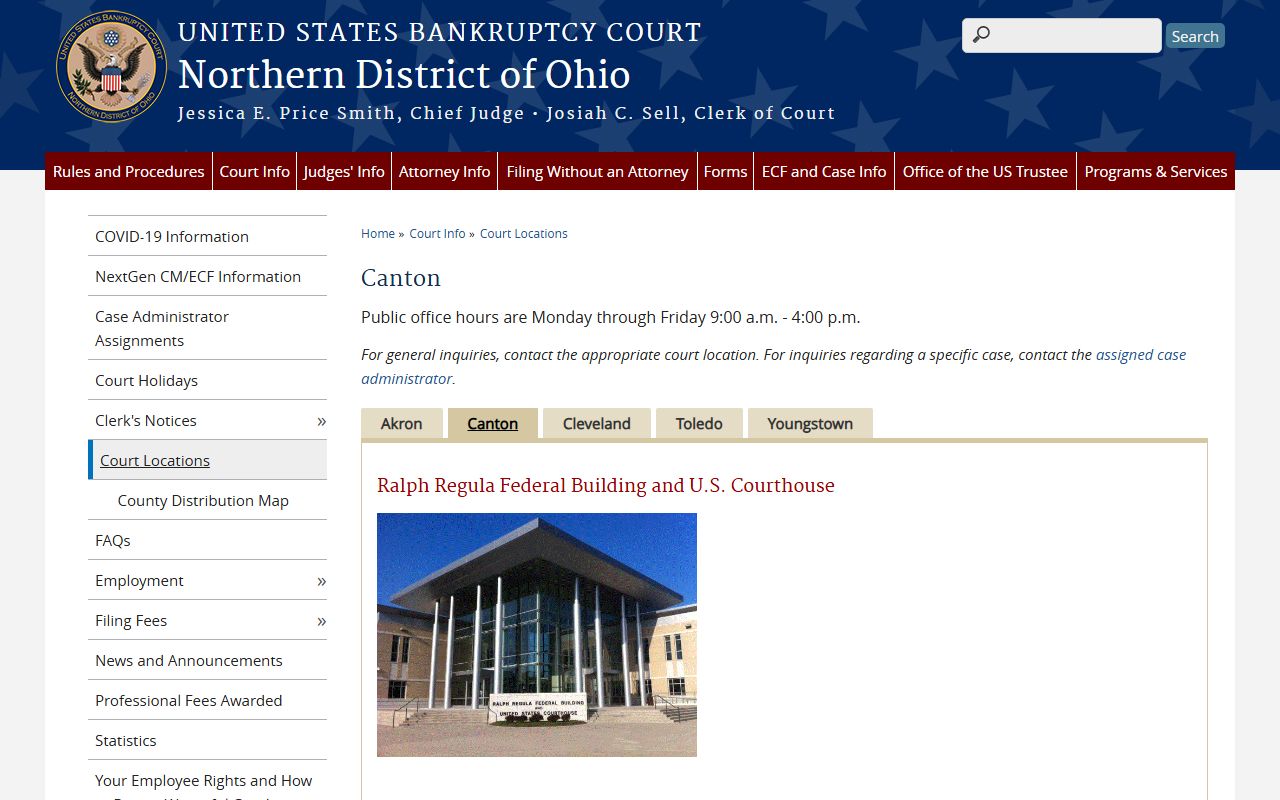
The Canton bankruptcy location serves Stark County residents and businesses filing Chapter 7, Chapter 13, and Chapter 11 cases. The docket for bankruptcy and all federal district cases runs through PACER, the federal court records system. The PACER site at pacer.uscourts.gov requires a free account and charges per-page fees for documents. The screenshot below shows the PACER login and case search portal.
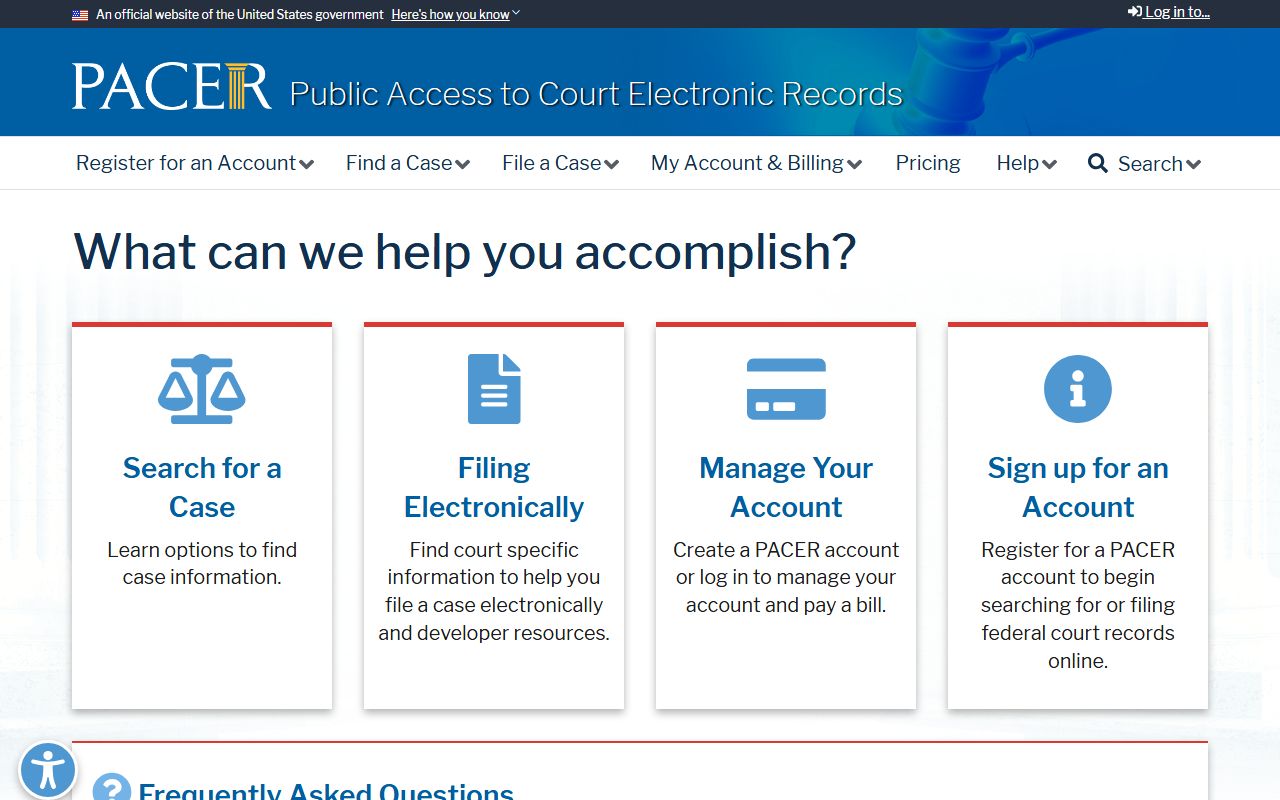
PACER is the official source for all federal dockets in Stark County. For users who want a free option before paying for documents, CourtListener at courtlistener.com maintains a large archive of federal opinions and some docket data at no charge. CourtListener is a supplemental tool, not an official court record.
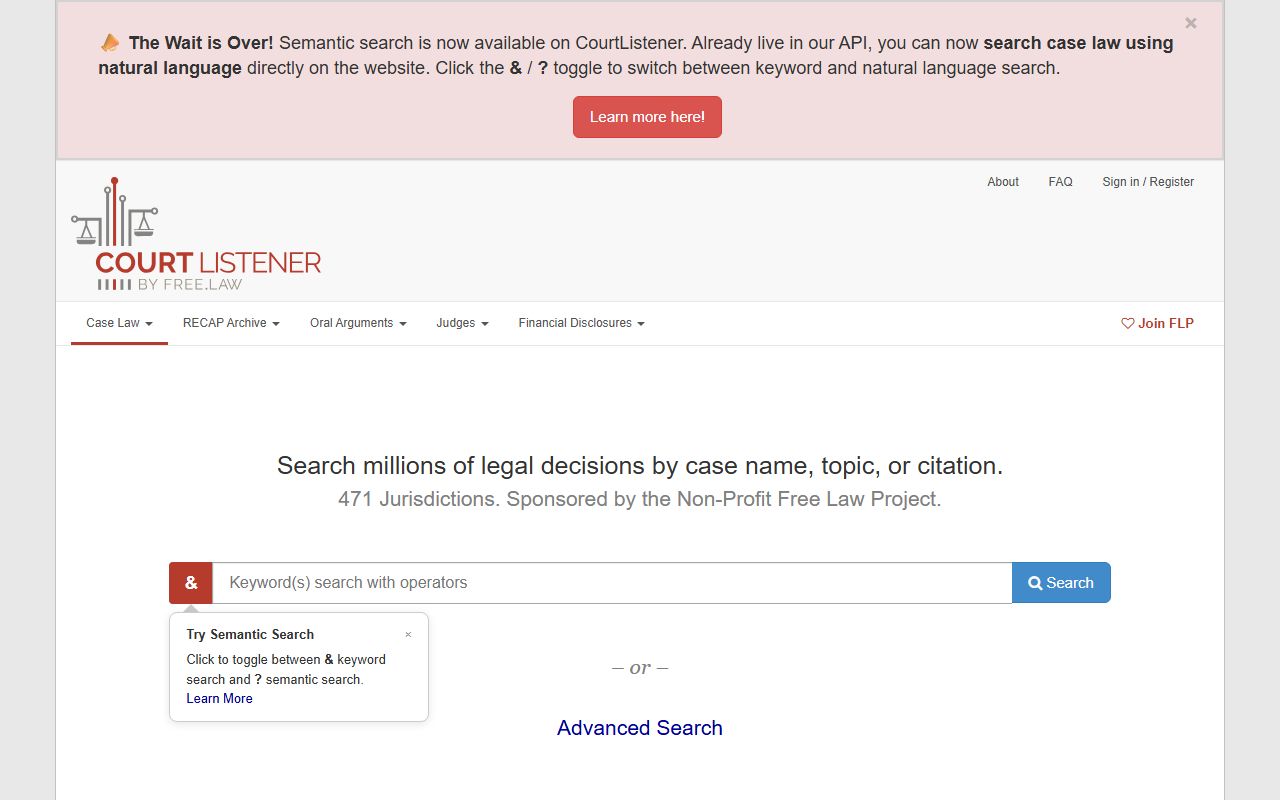
Federal District Court cases for the Northern District of Ohio are managed through the Cleveland divisional office. The full court site at ohnd.uscourts.gov lists clerk contacts, local rules, and case filing information for Stark County matters.
Stark County Criminal and Arrest Records
Criminal case records in Stark County split between two levels. Felony cases, from indictment through sentencing, run through the Court of Common Pleas and are searchable via the CJIS docket. Misdemeanor cases, including most first-time low-level offenses, sit in one of the three municipal courts depending on where the charge happened.
Arrest records and booking information are a separate category. The Stark County Sheriff handles arrests, bookings, and the jail roster at 4500 Atlantic Blvd. NE, Canton. What is in an arrest record is not the same as what is in a court case record. An arrest record shows the booking entry. A court case record shows what the court did with the case after that. The two do not always match. A person can be booked and released without charges, charged but acquitted, or charged and convicted. Read the court case record for the full picture.
The Stark County arrest records page covers booking records, how the sheriff's information relates to court filings, what mugshots are and when they are public, and how to check for active warrants. For the court side of a criminal case, start with the CJIS docket covered above.